Case
Microfactory developed close to the front line.
Establishing military bases in the field requires rapid setup of operations, maintenance, and technical service. In addition to basic functions, workshops with access to tools and spare parts are needed to keep equipment operational over time.
ClientBAE Systems Hägglund
IndustryDefence
ServicesHardware & Mechanics
Background
Traditionally, this service is highly dependent on functioning logistics chains, making operations vulnerable to disrupted transport, long lead times, or when spare parts are no longer manufactured. The need for a more flexible and local manufacturing solution therefore became clear.
Challenge
The challenge was to ensure access to spare parts even in disrupted or broken logistics chains. Units in the field need to be able to quickly repair and maintain equipment without dependence on external suppliers.
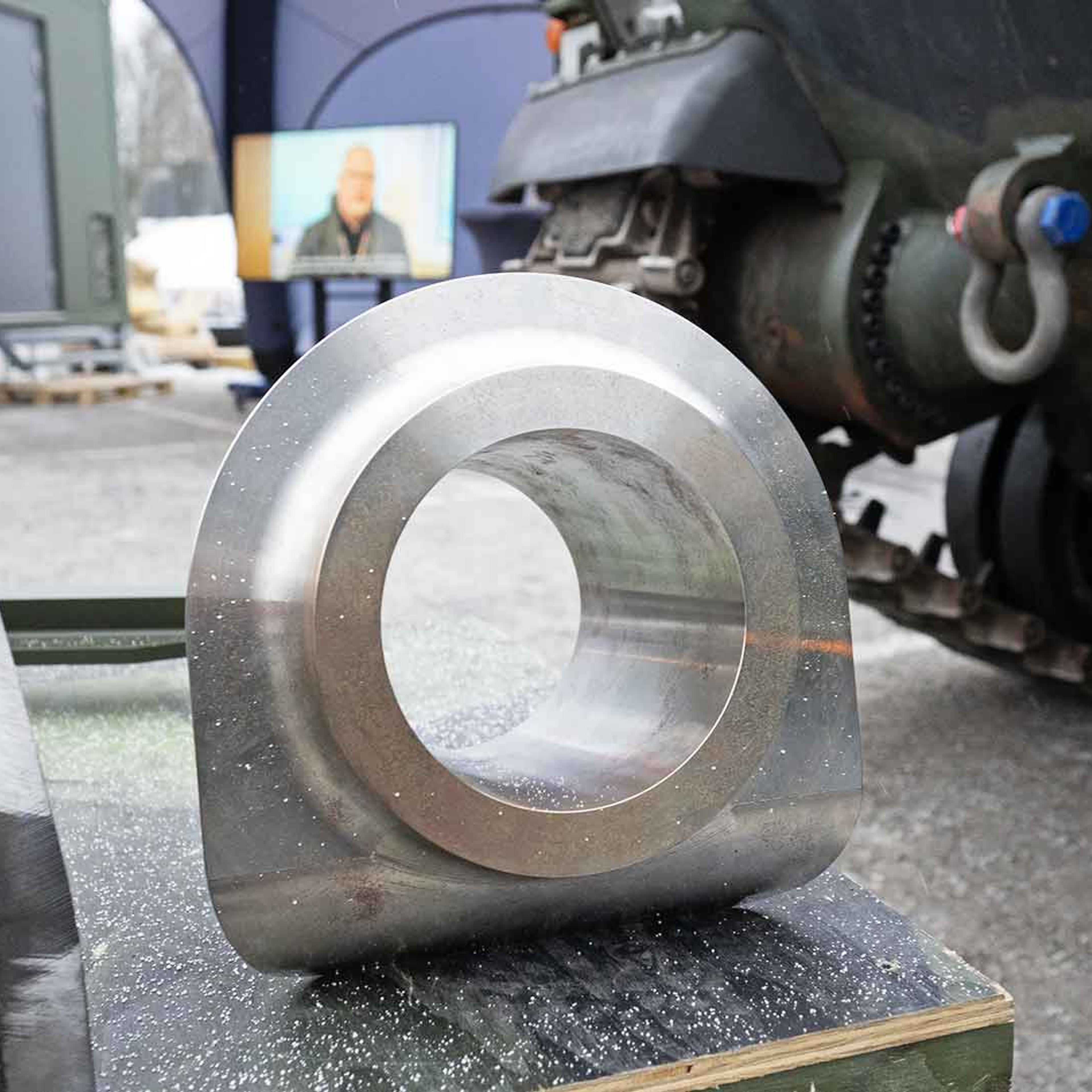
The opportunity lay in establishing local manufacturing capability close to the user. Through additive manufacturing, components can be produced on demand, enabling shorter lead times, increased flexibility, and improved operational endurance.
Engineering the microfactory.
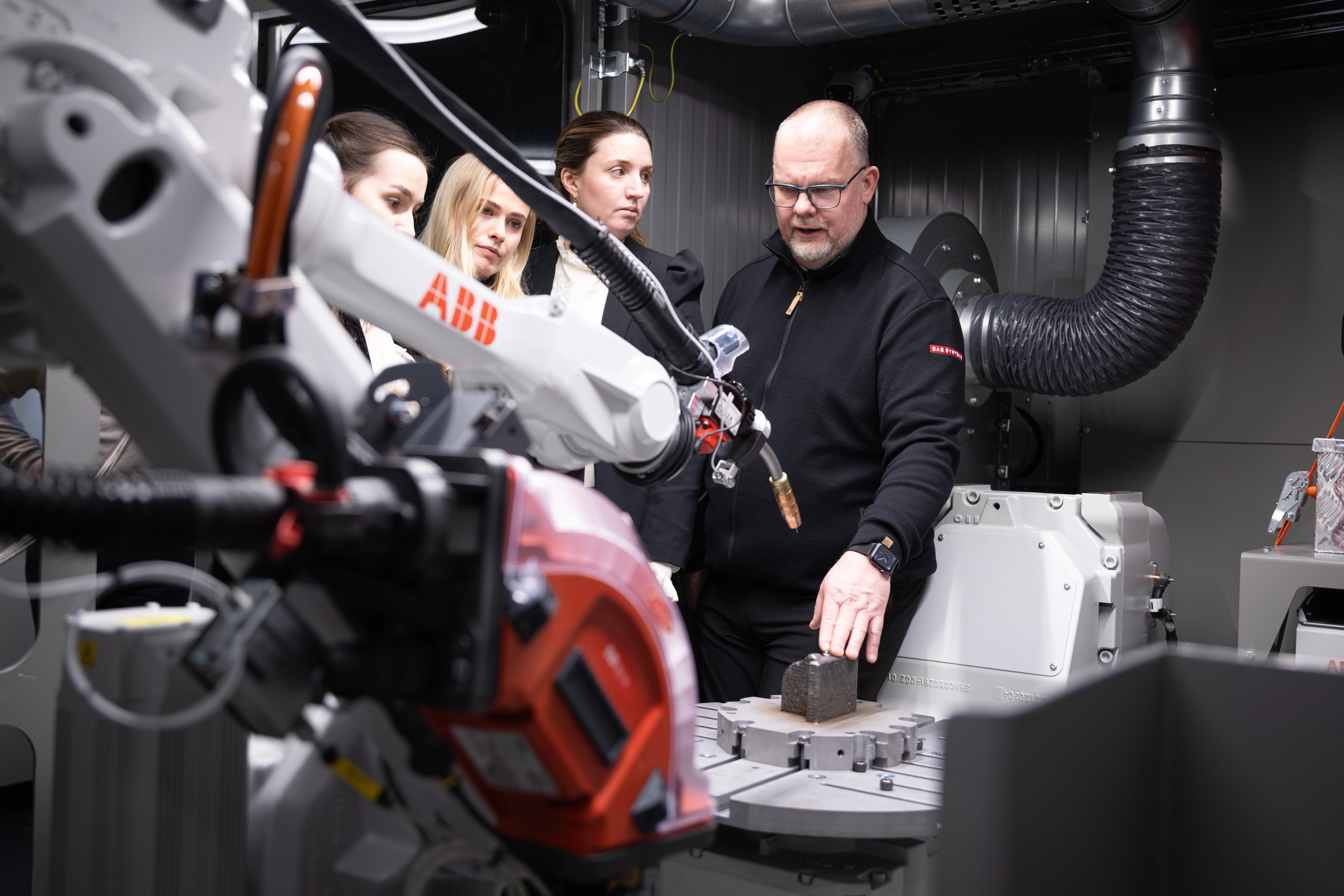
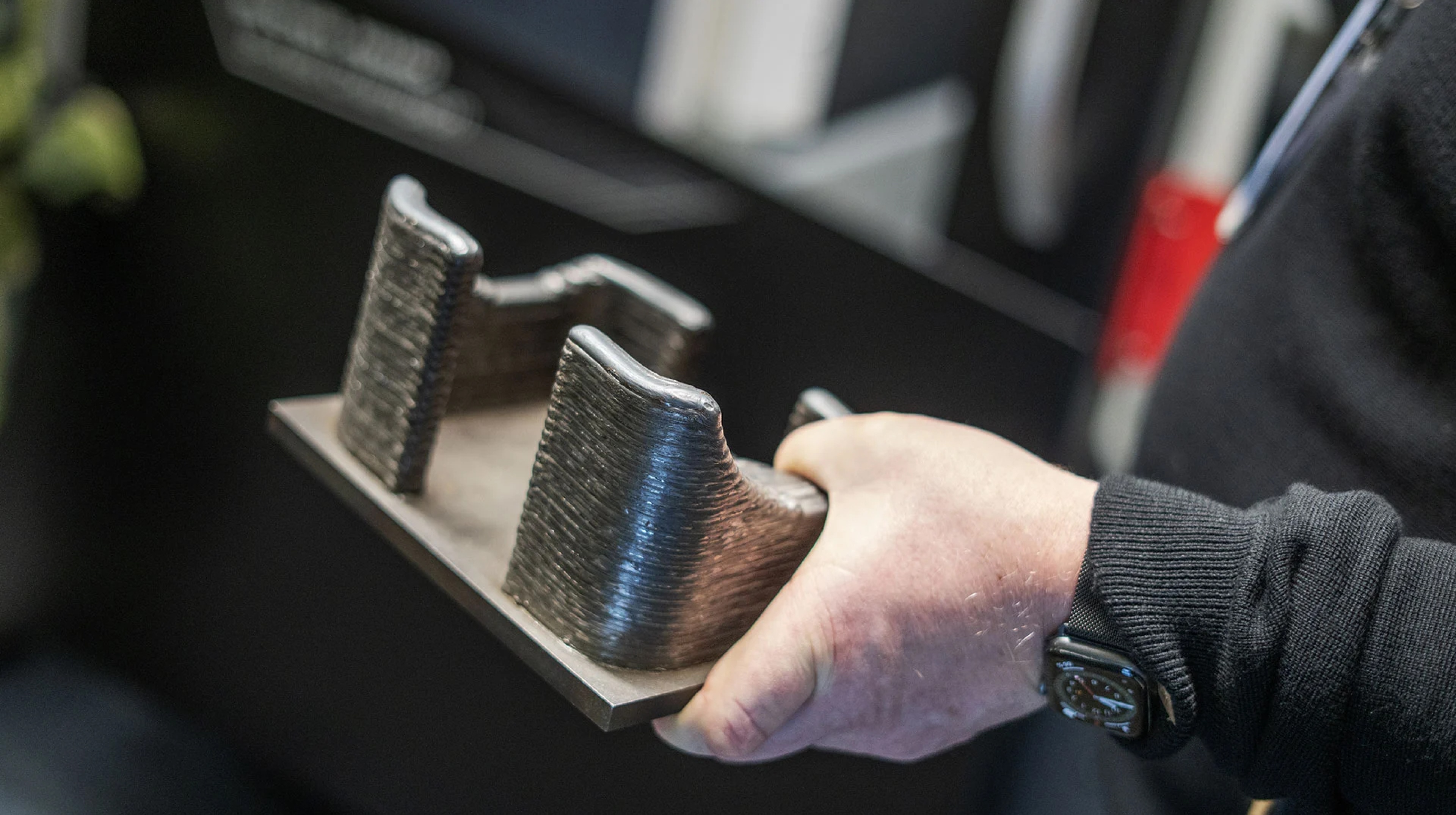
Since 2024, Knightec Group, together with BAE Systems Hägglunds, has conducted a pilot and experimental project aimed at exploring WAAM technology (Wire Arc Additive Manufacturing) and developing an autonomous manufacturing cell for field use.
The project was carried out in collaboration with BAE Systems Hägglunds, Saab, and FMV. Knightec Group’s part of the project focused on the development of the WAAM cell, including design, procurement, installation, assembly, testing, and safety documentation in a close and integrated collaboration.
Delivered Value
The delivery consists of a microfactory—a mobile workshop in containers—developed for flexible manufacturing in demanding environments. At the core of the solution is a WAAM cell for additive manufacturing of metal components based on predefined recipes and continuous quality monitoring.
The solution enables production close to the user with high repeatability and traceability. Interest is strong, and the Swedish Armed Forces plan to demonstrate the microfactory during exercises in 2026. The project shows how additive manufacturing can strengthen operational capability and supply readiness.